

Fruit & Orchards
The Sugar Line
Jeju's open-field tangerine harvest is starting. Every box that leaves the island has passed a rule about size and sugar, and that rule has been moving from the first to the second.
 By Ji-hyun Choi
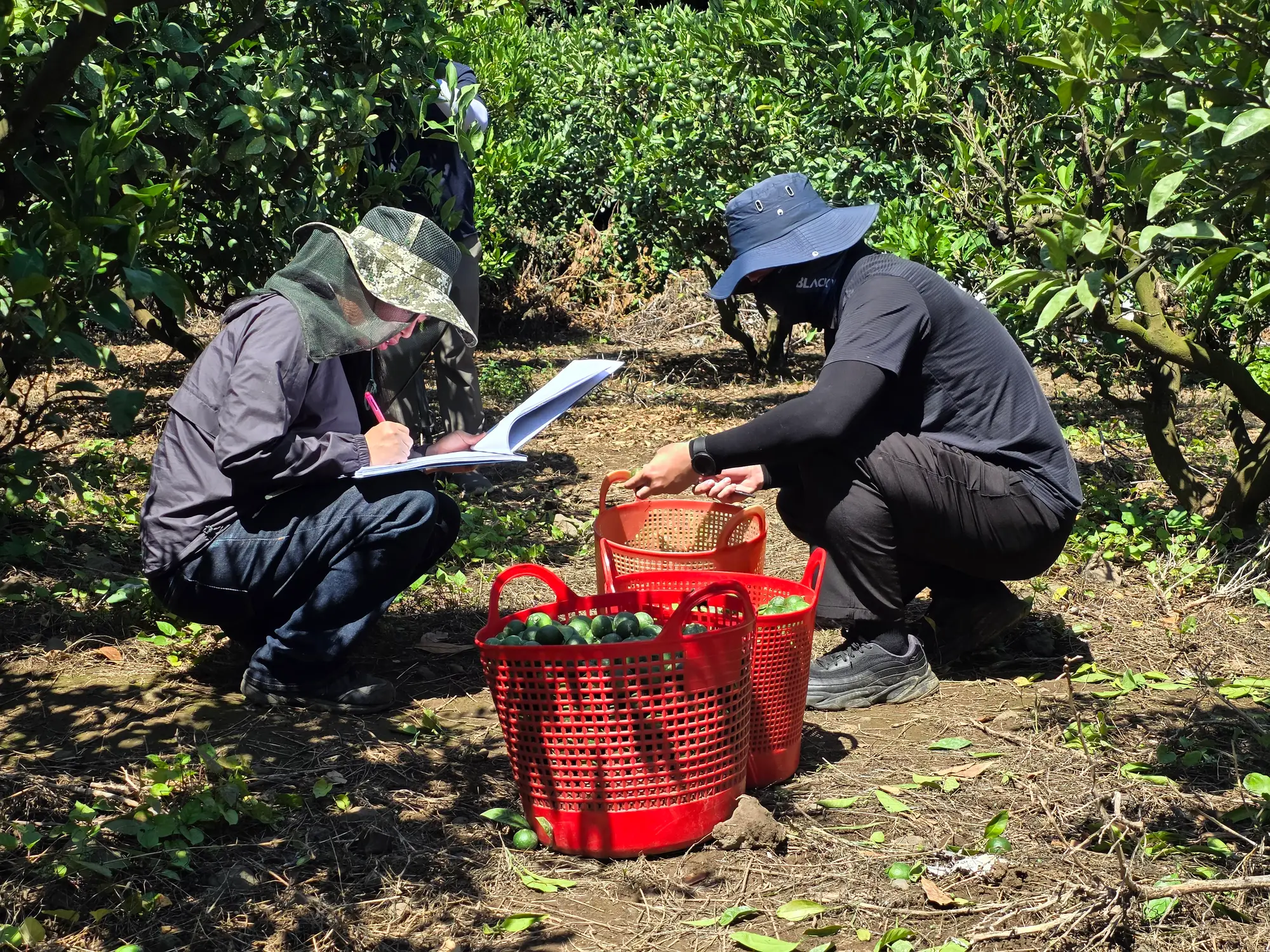
Until 1 October, Jeju growers who wanted to ship ultra-early tangerines had to pass an extra test. City inspectors picked ten fruit, and at least eight had to read 8.5 brix or more, a measure of the sugar in the juice. Now the fruit goes straight to the packing houses, and to the test every Jeju tangerine faces there.
There is plenty to test. The province's agricultural research service expects about 443,300 tonnes of open-field tangerines, 7.8 percent more than last year, and rates the fruit's quality the best since its surveys began.
Commercially, a tangerine is whatever a rule says it is. Jeju's citrus ordinance fines anyone who ships or sells fruit that misses the province's product standard; processors buy that fruit at a price set each year. The standard sets a size window and a sugar floor, and sugar can now override size: a tangerine too small to sell counts if it is sweet enough. This is how the line is drawn, who enforces it, what it is worth and what is pushing on it.
For the climate forces redrawing Korea's fruit map, read The Orchard Moves North.
The line in four numbers
- Onju size window
- 49–70 mm
- Five classes, 2S to 2L; at 10 brix or more, fruit from 45 mm may ship too (2026 terms).
- 2026 open-field forecast
- 443,300 t (+7.8%)
- Second survey, 19–25 August; the final estimate comes in November (Jeju research service, 2026-09-08).
- Paid for fruit that misses
- ₩210/kg
- 2026 processing price: ₩140 from processors, ₩70 from the province (Jeju province, 2026-09-16).
- Citrus gross revenue, 2025
- ₩1.307 trillion
- The third year in a row above ₩1.3 trillion (Jeju province, 2026-07-16).
What the rule says
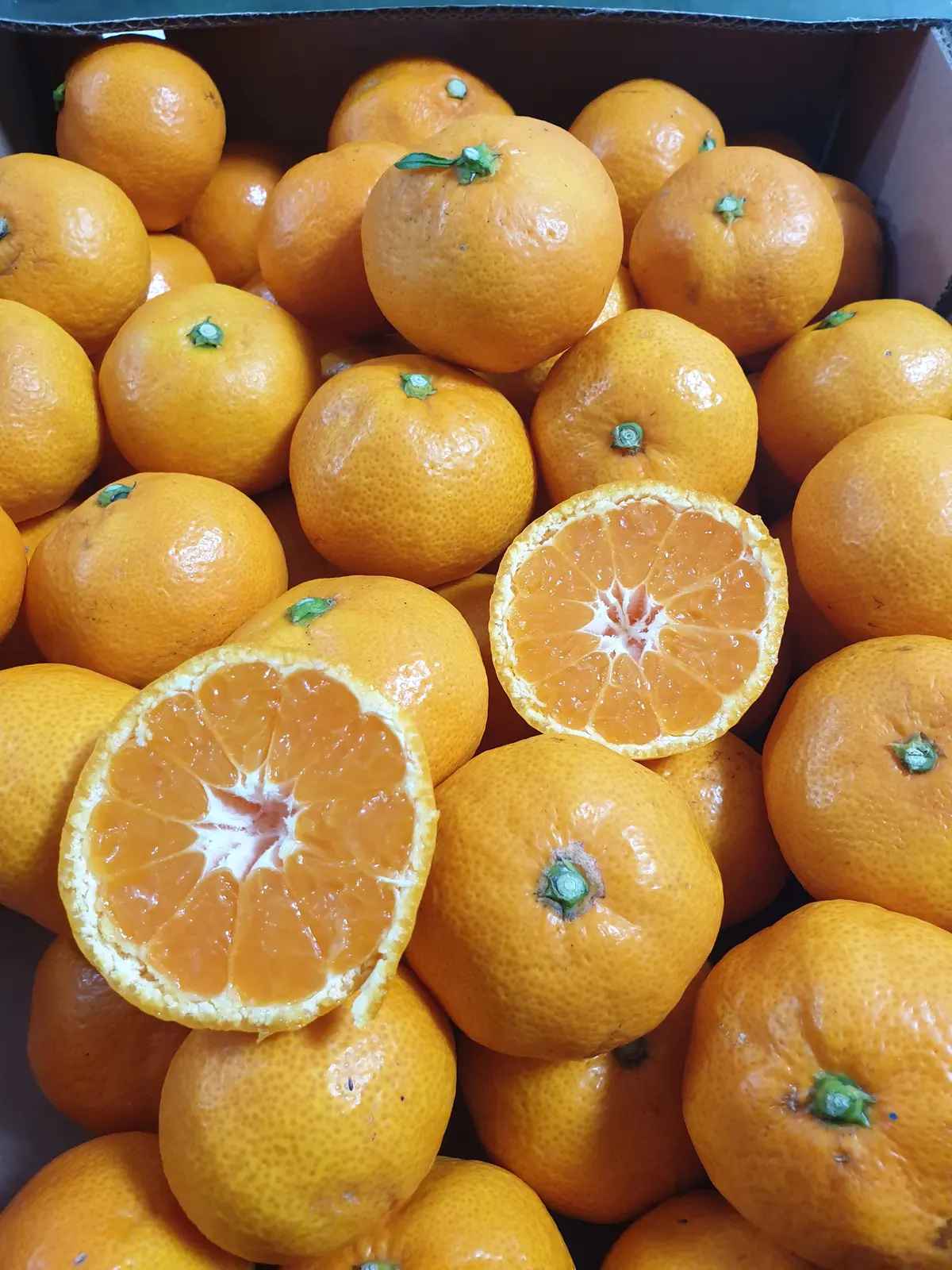
Under the enforcement rule's annex, last amended in October 2024, onju (satsuma) tangerines, the island's main crop, must measure 49 to 70 millimetres across, or weigh 53 to 135 grams, in five classes from 2S to 2L. The sugar floor depends on how the fruit was grown: 8.5 brix for ultra-early open-field fruit, 9.0 for the main open-field crop, 10.0 for greenhouse fruit and fruit ripened through winter under rain shelters. Peel may not stand away from the flesh over half its surface, and no fruit may carry a serious defect, such as rot, artificial colouring or a sunburn scar 1 centimetre wide.
Then comes the clause that changed the rule's character: whatever the size limits say, onju of 10 brix or more count as product when the governor announces it after consulting the growers' citrus committee. On 14 September the committee set the 2026 terms. Fruit from 45 to 49 millimetres may ship if an optical sorter or handheld meter reads 10 brix or more, as may export fruit from 70 to 77 millimetres, and fruit that size grown over reflective ground sheets such as Tyvek if a sorter passes it. In Jeju, a tangerine 47 millimetres across is processing fruit at 9.9 brix and a boxed tangerine at 10.
Hybrid citrus, the late-season fruit sold as hallabong and its relatives, is judged on sugar and acid instead: at least 11.5 brix and at most 1.1 percent acid for hallabong, cheonhyehyang, redhyang and karahyang, 10.0 brix and 1.0 percent for hwanggeumhyang. Those limits apply only once a variety covers 100 hectares on the island.
In Jeju, a tangerine 47 millimetres across is processing fruit at 9.9 brix and a boxed tangerine at 10.
Who checks the box
Every packing house that ships product fruit registers with its city and keeps up to three trained inspectors, appointed yearly. Only fruit an inspector passes gets the inspection mark, with variety, origin, weight, size class and shipper on the box. Forcing ripeness or colour with ethylene, carbide or heaters is an offence in itself. Fines run up to ₩10 million, and a packing house that breaks the rules twice in a year can lose its registration.
On 16 and 17 September, provincial teams checking Seoul's Garak market and two other mainland markets found one off-standard shipment, 1,135 kilograms, which now faces a fine.
From size to sugar
The sugar clause is the newest layer of a rule built to keep weak fruit off the market. Today's ordinance dates from 2006. Since 2021 the province has tested ultra-early fruit before harvest, because under-ripe fruit shipped early, it says, drags down trust in all Jeju citrus. In 2022 it changed what happens to rejects: after four years of an on-farm isolation programme, which left an image of 'discarded tangerines' and complaints about the look of tourist areas, it began buying them for processing. In October 2024 the sugar override entered the rule. The island now grades more on taste and less on size.
How Jeju's citrus line has moved
Milestones in the rule and its yearly terms, from the province's ordinance, enforcement rule and releases.
- October 2006Today's citrus ordinance enacted
Product standards, inspection and fines.
- 2021Sugar test before the early harvest
Today it covers ultra-early fruit shipped before 1 October.
- October 2022Rejects go to processors
Instead of being kept on farms.
- October 2024Sugar can override size
Onju at 10 brix or more can count, on the governor's notice.
- September 2025The 2025 terms
45–49 mm and export 70–77 mm onju may ship at 10 brix; processing pays ₩210/kg.
- September 2026Unchanged for 2026
Kept to avoid confusion on farms and in the trade.
- November 2026Jeju Citrus Expo
Seogwipo Agricultural Technology Center, 19–23 November.
What the line is worth
Failing has a set price. For 2026, processors pay ₩210 a kilogram for fruit that misses the standard. The province's tables put the average return on the 2025 open-field crop at ₩1,701 a kilogram, so by Ag Digest's arithmetic, fruit below the line earns about an eighth of the average. That crop of 410,965 tonnes grossed ₩699.0 billion.
Ag Digest's archive of settled wholesale auction prices shows the calendar growers sell into. At Seoul's Garak market, mandarins averaged ₩2,854 a kilogram in December 2025, when 11,245 tonnes sold, and ₩8,537 in June 2026, the greenhouse season, when 316 tonnes did: every grade pooled, as retrieved on 5 October 2026. Current prices are on our mandarin and hybrid citrus pages.
Sugar is also how a grower beats the market average. One Seogwipo grower who ships rain-shelter fruit at 16 to 18 brix explained:
From the archive
Sugar at auction
I usually ship to Seoul's Garak market through the Jeju Citrus Growers' Cooperative from October to December, and my average winning bid is 1.5 to 1.8 times or more that of the same item.
Where the trees went
The line shapes planting, too. The province's tables show open-field onju shrinking from 16,775 hectares for the 2015 crop to 13,972 for 2025, and its growers from 22,659 farms to 19,983. More than half of that loss came in one step, between the 2016 and 2017 crops, that the tables do not explain. Over the same decade the four biggest hybrids doubled, from 1,917 to 3,834 hectares: cheonhyehyang from 260 to 1,071, redhyang from 145 to 932, hwanggeumhyang from 76 to 368, with hallabong steady near 1,450.
Hybrids earn more per kilogram (₩3,657 for hallabong and ₩4,801 for redhyang in 2025), but most have been grown under cover, the province says.
Heat raises sugar and scars peel
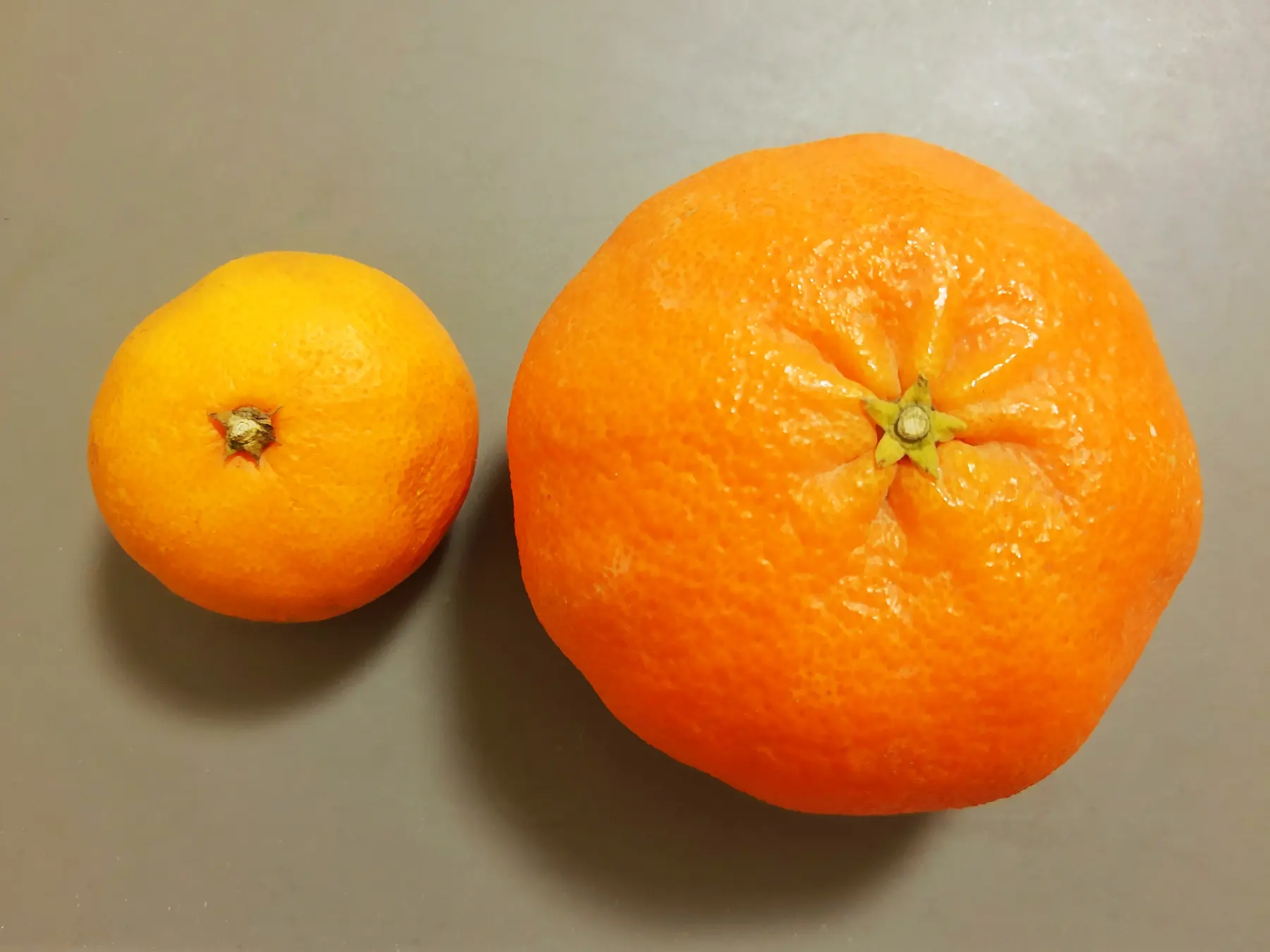
Weather pushes fruit across the line from both sides. This summer helped sugar: July and August ran 2.0°C and 1.8°C warmer than normal, with far less rain and more sun, and the August survey found sugar at 8.5 brix, 1.4 above the five-year average. It also found more fruit per tree than usual, 909 against 813, and smaller fruit in Jeju City, the island's northern half: 41.9 millimetres, 2.6 below normal.
Heat also scars, and a sunburn mark 1 centimetre wide makes even a sweet fruit a serious defect. The Citrus Research Center of the Rural Development Administration (RDA), as reported by Agriculture, Fisheries & Livestock News, says fruit skin can run 16°C hotter than the air and that the risk climbs once it stays above 46°C for three hours; in its trials, misting at midday cut sunburn from 4.0 to 1.9 percent.
On our reading, a crop of many small fruit leans harder on the 10-brix clause, while heat marks count against even the sweetest. November's survey gives the final volume and defect rate.
From the archive
On the heat
Once sunscald appears it is hard to undo, so prevention matters most.
Late citrus moves outdoors
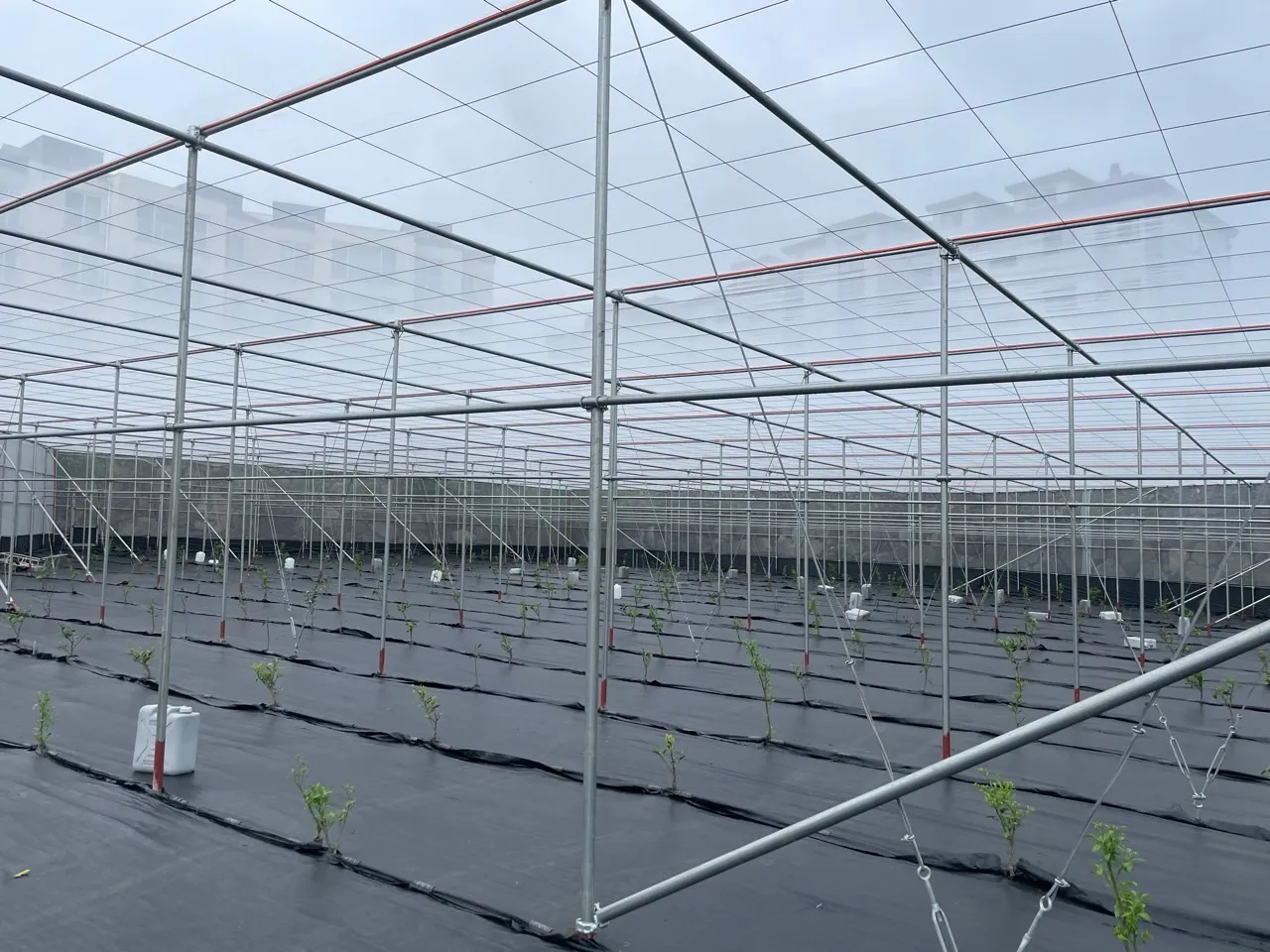
The other answer is breeding. The province's research service has released six hybrids since it began crossing citrus in 2011; by this year they covered 68.5 hectares on 698 farms, with 850 hectares targeted for 2030. Last season they sold for ₩6,500 to ₩10,000 a kilogram, 1.3 to 2.6 times the older hybrids. In August the service moved to protect a variety bred for open fields, with sunburn and splitting each under 5 percent. On four trial farms in Seogwipo, woorihyang, mannabong and winter prince grow outdoors under net, which the province says could also cut royalties on foreign varieties.
Korean breeders have released 23 hybrids, 17 of them RDA's, Korea Rural Economic Newspaper reported; RDA's tamnabong covered 19.1 hectares in 2025, against hallabong's 1,463. Neither tamnabong nor the Jeju service's varieties yet reach the 100 hectares at which the hybrid sugar standard applies, so on our reading their sellers, not the rule, set their quality.
“Jeju does not sell the fruit it grows. It sells the fruit that clears the line.”
Field note: reading a box of Jeju tangerines
- Look for the inspection mark, with variety, origin, weight, size class and shipper.
- Read the size class: 2S to 2L is 49 to 70 millimetres; smaller onju need 10 brix.
- Know the floor: 9.0 brix for the main open-field crop, 10.0 for greenhouse and winter-harvest fruit.
- Check the variety: a hybrid grown on under 100 hectares is outside the hybrid sugar standard.
The Citrus Expo runs from 19 to 23 November in Seogwipo. A question to take there: when every fruit's sugar can be measured, how long should size decide what counts as a tangerine?
Citrus news now
LiveRecent reporting on Jeju citrus, hybrids and the harvest from the Ag Digest news corpus.
- Traces of bursting fruit… The daily life of a farmer imprinted on the palmsNongmin Newspaper (농민신문) · Oct 27, 2026
- “Didn’t close it even when it rained”… Opening skylights and side windows to ventilate caused Red Hyang fever to drop sharplyNongmin Newspaper (농민신문) · Oct 23, 2026
- Rural Development Administration Inspects Technology to Reduce Fruit Splitting in ‘Red Hyang’ Citrus FarmsRural Development Administration (농촌진흥청) · Oct 16, 2026
- Increased Utilization of Natural Extraction and Fermentation Technologies for Horticultural and Specialty Crops in Cosmetics and Bio-industriesRural Development Administration (농촌진흥청) · Oct 16, 2026
- Increased ‘Red Hyang’ Fruit Splitting Due to Climate Change Reduced Through Cultivation Management TechniquesRural Development Administration (농촌진흥청) · Oct 16, 2026
- Tangerine ‘Minihyang’ improves hair loss, ‘Jeju Sasa’ for brain health… Rediscovery of agricultural resourcesKorea Farmers & Fishermen Newspaper (한국농어민신문) · Oct 16, 2026
More from the Magazine

Between the Forest and the Factory: Korea's Mushrooms Ask for a Law of Their Own
Pine mushrooms still come only from living pine forests, and this autumn's auctions sold a sixth of last year's volume. Most Korean mushrooms grow indoors on sawdust and bran, and the law calls what is left of that substrate waste. Two bills would give the industry an act of its own. What would it change?

The Chestnut Hills: How Korea's Autumn Nut Lost Its Biggest Buyer
Every autumn the hills around Gongju and Buyeo drop their burrs, and the nuts are sorted by size and sold to a co-op at a price the growers did not set. Behind every bag is a harvest about half what it was at the start of the century, orchards and growers that have aged together, and an export trade to Japan that has all but gone.

The Birds Come Back: Korea's Winter of Avian Flu and the Price of an Egg
Every autumn wild ducks and swans fly south to Korea, and poultry farms go on alert. Behind each tray of eggs is a layer flock that has been culled and rebuilt before, a compensation rule that pays for caution, and a price the government watches week by week.