

Specialty Crops
Six Years in One Field
A ginseng root holds its field for up to six years, under shade and through every summer, and then the land cannot grow ginseng again for a decade or more. That is why Korea's ginseng farms keep moving, and why the industry is now trying to make them stay.
 By Sung-hoon Park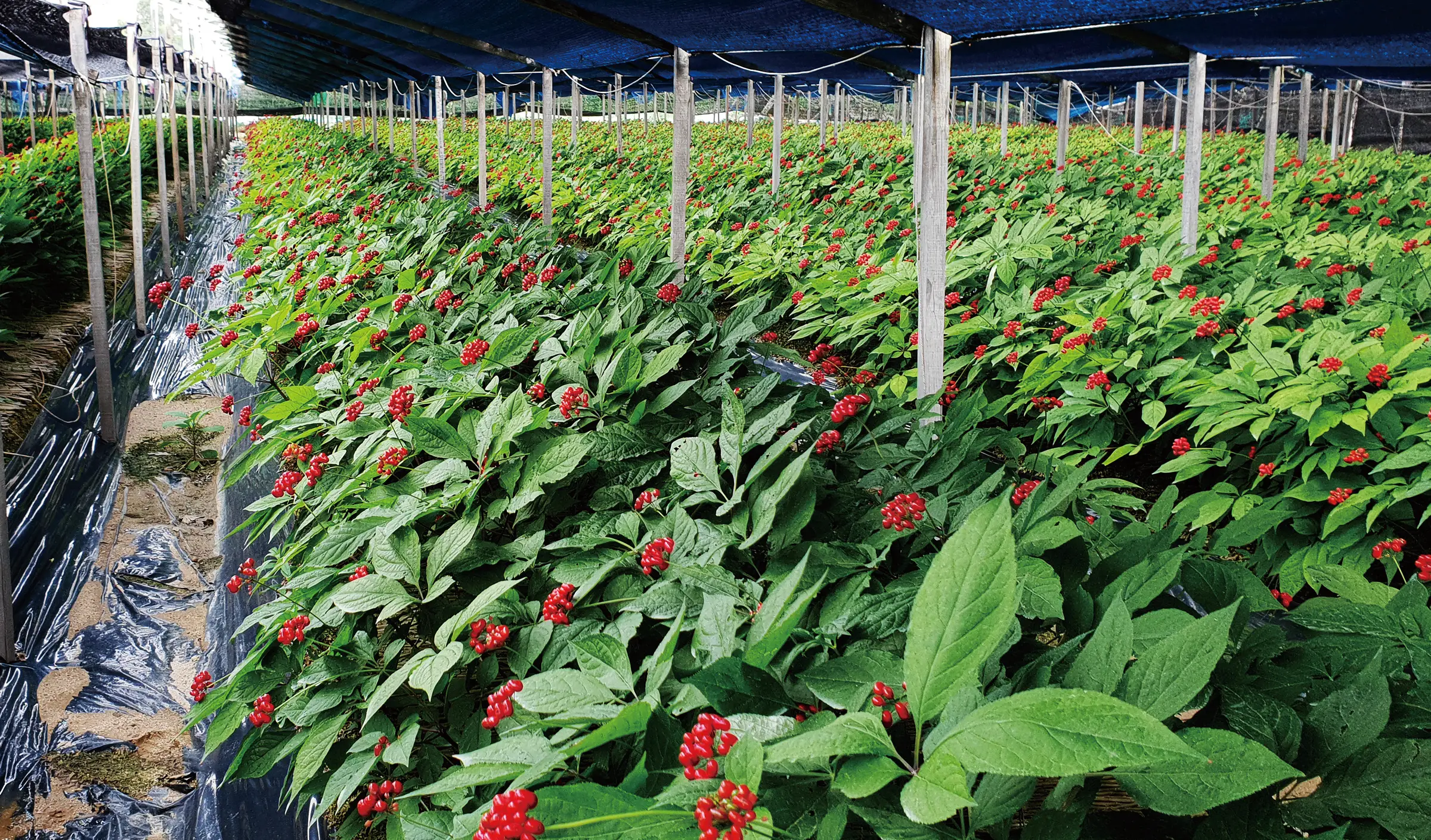
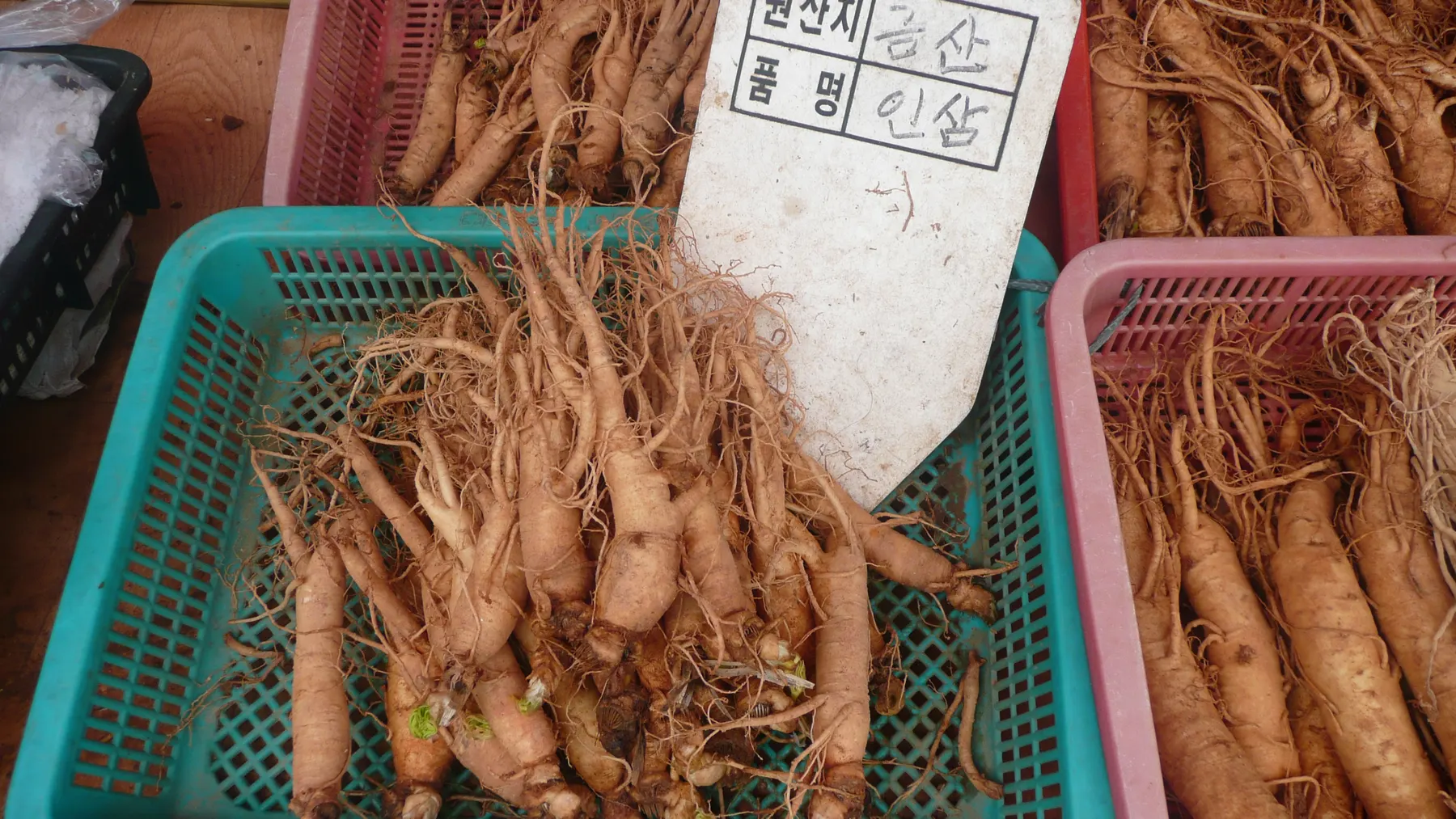
On 2 October the 44th Geumsan World Ginseng Festival opened in South Chungcheong; a day later Yeongju opened its Punggi Ginseng Festival in North Gyeongsang. Both run to 11 October, two of the 11 regional ginseng festivals that the cooperatives' NH Economic Holdings lists through the end of the month. The timing is the crop's: the Rural Development Administration (RDA) calls October the start of the harvest of fresh roots, susam.
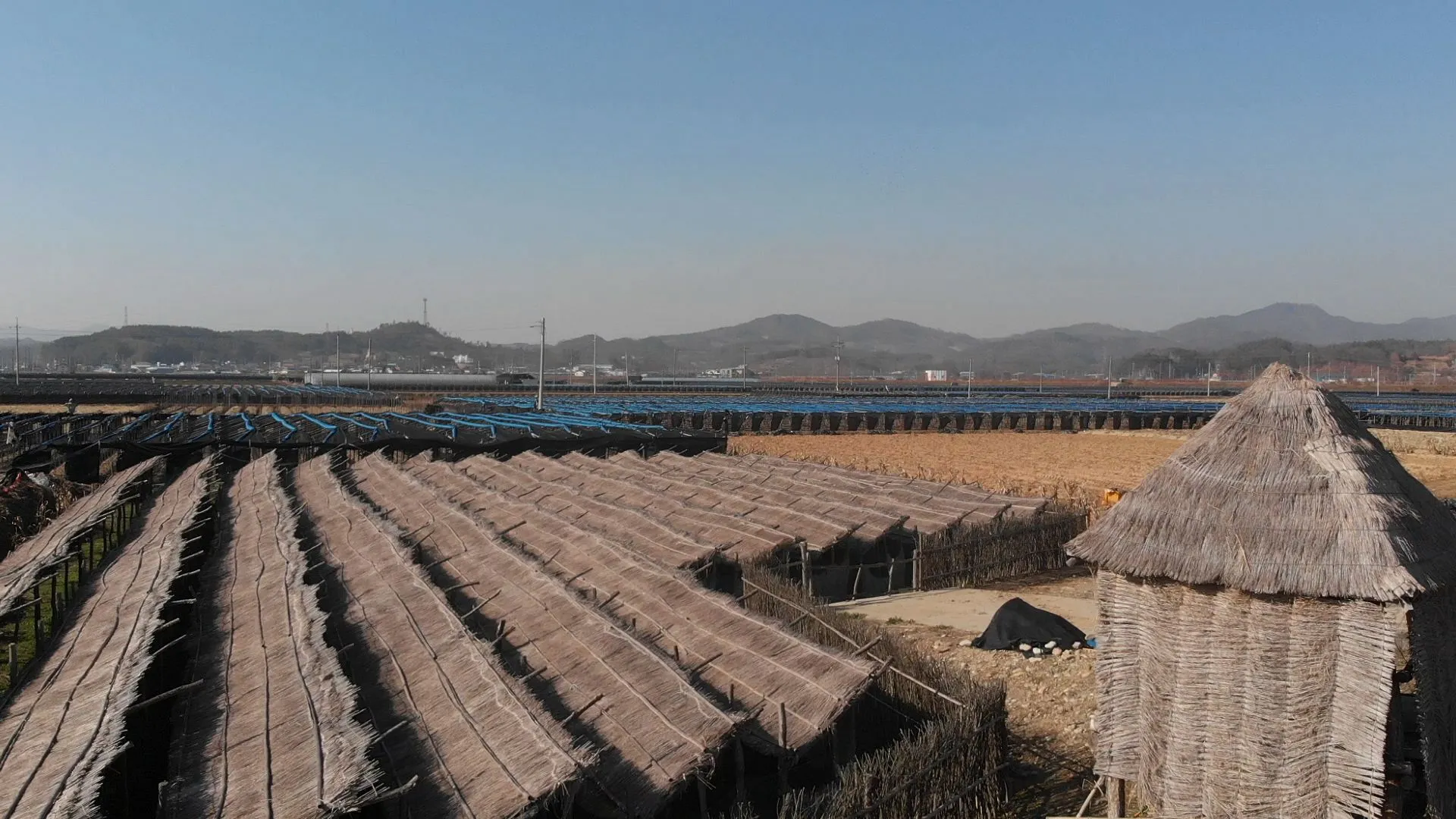
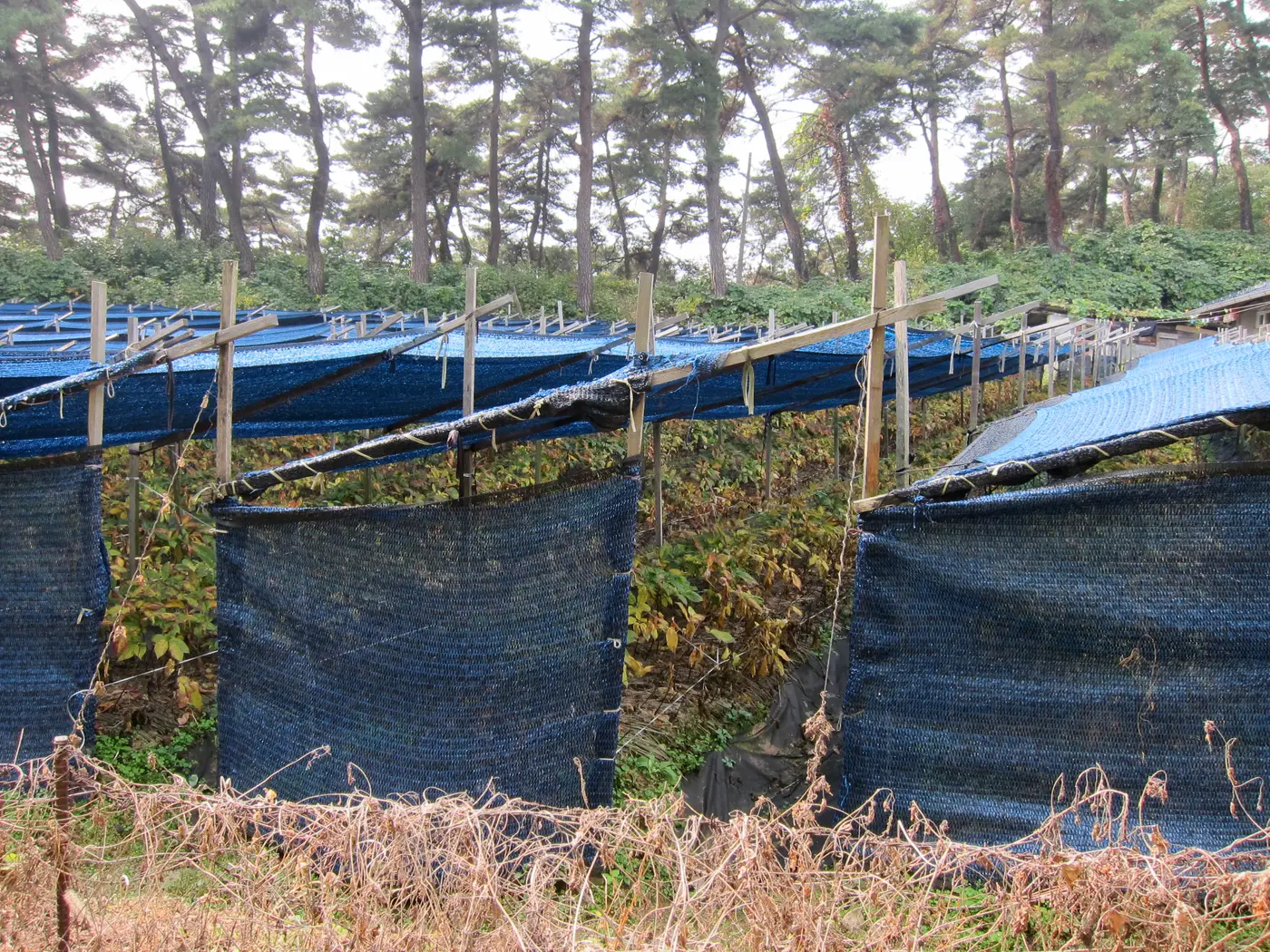
The roots on those festival tables are the end of a long wager. RDA describes ginseng as a crop grown for four to six years under shade structures built over the field. Through all that time the field earns nothing. When the roots are finally dug, the land cannot simply be planted again: RDA says ginseng can return to upland soil only after 10 to 15 years, and to paddy soil after four to five. A ginseng farm is therefore a business of finding fresh land, committing it for most of a decade, and moving on.
Heat, rain, a shrinking export market and a shortage of land that has never grown ginseng now press on that arithmetic at once, and the national ginseng area has shrunk to a little more than half its high. This is what it costs to hold one field for six years, and what the industry is trying instead.
Ginseng by the numbers
- Area under ginseng, 2024
- 10,585 ha
- Of which 2,712 ha were harvested that year. The ministry's series peaked at 19,010 ha in 2010.
- Ginseng farms, 2024
- 15,877
- Down from 22,986 in 2014.
- Wait before replanting an upland field
- 10–15 years
- Four to five years in paddy soil, according to RDA.
- Ginseng exports, 2025
- $203.5 million
- Down from $269.7 million in 2022, by aT's export statistics.
One harvest, after years of waiting
The calendar starts before the field does. RDA advises growers aiming for four-year roots to pick seed in the plants' third year, and those aiming for five or six years to pick it in the fourth; the seed then needs 90 to 100 days of treatment to crack its coat before it will sprout.
The law counts the years too. Korea's Ginseng Industry Act defines root age as the years since sprouting, and separates fresh ginseng (susam, undried), white ginseng (baeksam, dried without cooking) and red ginseng (hongsam, steamed and dried). Anyone growing ginseng for sale must report the field to the local ginseng cooperative by 1 June, and processed ginseng cannot be sold or exported uninspected.
All of this lands on a single payday. RDA's 2025 farm income survey put four-year ginseng, over one complete four-year crop, at 680 kilograms per 10 ares (1,000 square metres), 24,670 won per kilogram and an income of 7,441,000 won per 10 ares. That income is for the whole crop, not one year of it.
A ginseng farm is therefore a business of finding fresh land, committing it for most of a decade, and moving on.
Why the fields keep moving
The reason a ginseng field cannot simply be replanted is called replant failure (yeonjak jang-hae). RDA attributes it to soil-borne disease, root rot above all, that builds up under a ginseng crop and makes it hard to grow ginseng again where it has already grown. In Geumsan, whose traditional ginseng farming FAO added to its Globally Important Agricultural Heritage Systems in 2018, FAO describes farmers using a 15-to-20-year rotation.
Land that has never grown ginseng is running short, and growers have gone into rice paddies. RDA counts ginseng grown in paddies rising from 5,625 hectares (36.4 percent of the total) in 2018 to 7,308 hectares (49.6 percent) in 2022, and links the shift to the scarcity of upland fields free of replant failure. Even a new site, RDA advises, needs one to two years of green-manure crops before planting.
Of the 10,585 hectares under ginseng in 2024, 2,712 were harvested. By Ag Digest's arithmetic, that is about one hectare in four; the rest held roots that were not yet ready.
Where ginseng is grown
Area by province in 2024, in hectares. Gangwon has the most, ahead of Gyeonggi and North Chungcheong; South Chungcheong, home to Geumsan, is fourth.
Select a region to focus it.
- 31–451
- 451–871
- 871–1,291
- 1,291–1,711
- 1,711–2,131
| Region | Area under ginseng (ha) |
|---|---|
| Gyeonggi | 1,901 ha |
| Incheon | 40 ha |
| Gangwon | 2,131 ha |
| Chungbuk | 1,835 ha |
| Sejong | 77 ha |
| Chungnam | 1,693 ha |
| Daejeon | 31 ha |
| Gyeongbuk | 1,258 ha |
| Jeonbuk | 1,248 ha |
| Gyeongnam | 79 ha |
| Jeonnam | 291 ha |
Province totals as published in the agriculture ministry's statistics yearbook for 2024, in hectares of area under ginseng (planted area, not harvested area). The yearbook lists eleven provinces and cities; the rest are shown without a value and are not zero by implication. No farm-level data is used.
Twenty degrees
Six years in one place means six summers in one place, and ginseng is a cool-weather plant. RDA describes it as a low-temperature crop that grows well at around 20°C; when temperatures above 30°C last for more than a week, photosynthesis stops. The youngest plants, from seedlings to two-year roots, suffer the most. The shade frame exists for this reason, and it is only as good as the summer is mild.
Rain has become the other half of the problem. RDA surveyed disease in six growing areas from 2021 to 2025. The share of leaves with leaf-spot disease, three to five percent in 2021 and 2022, reached 58.3 percent in Yeoncheon and 61.4 percent in Geumsan in 2025. Anthracnose, recorded at 22.4 percent in Yeoncheon in 2023, rose to 69.2 percent in Geumsan in 2025. In some areas, the release adds, 80 to 95 percent of the plants' growth above ground had died off by September. Its explanation is the weather: hot, humid spells before and after the monsoon bring disease earlier and in combination.
This summer the agriculture ministry counted 5,887.8 hectares of crops damaged by heat and drought, naming ginseng first alongside sweet persimmon, pear and green onion. That figure covers all crops; the ministry gave no ginseng-only number.
“A ginseng field is paid for once, at the end, and then it has to be left alone.”
What the exports say
By the export statistics of aT, the Korea Agro-Fisheries and Food Trade Corporation, ginseng exports reached $269.7 million in 2022, then fell three years running: $260.2 million in 2023, $249.3 million in 2024 and $203.5 million in 2025. China alone took $78.1 million of the 2025 total, ahead of Japan, Vietnam and the United States. In the first eight months of 2026, exports came to $103.5 million by the same count.
What leaves the country is mostly not the root on the festival table. The ministry's 2024 breakdown is led by whole red ginseng ($73.7 million) and ginseng drinks ($67.7 million); fresh roots came to $1.6 million. The agriculture ministry keeps its own export tally, defined differently from aT's and with higher totals, and by that count first-half exports in 2026 were 21.6 percent below a year earlier.
When the ministry and aT met exporters in July, Korea Agriculture Newspaper reported, the companies raised China's revised import standard for Korean red ginseng and Vietnam's revised food-safety law; aT said it would seek buyers and new outlets in Europe and the Middle East.
From the archive
In their words
We know all too well how hard it is for ginseng farmers, who must move every year in search of good land and then face weather disasters that no human effort can prevent.
With the global health-supplement market changing and protectionism rising in many countries, our ginseng exports stand at a critical turning point.
Learning to stay
RDA's answer is to stop moving. It calls the approach settled cultivation: growing ginseng on the same site, crop after crop, inside a double-structure house. The roof is left 60 centimetres open, under an outer shade net that can be opened and closed. RDA says the house can keep the inside two to three degrees cooler than a conventional shade frame in a midsummer heatwave, and that its resistance to typhoons and heavy snow has been certified. A new-technology programme is rolling it out at 14 sites, with 20 planned by 2027.
Staying put means treating the soil instead of resting it: RDA combines green manure, soil fumigation and microbes that suppress root-rot pathogens into one control method. Whether one site can carry ginseng crop after crop without the old losses is the claim to watch, and it will take at least one full four-to-six-year crop to judge.
The tradition being honoured this autumn is the moving one. Korea designated ginseng cultivation and its medicinal culture a national intangible heritage in 2020, and on 31 March 2026 the Korea Heritage Service submitted the Insam Tradition to UNESCO; the decision is expected in December 2028.
A crop measured in years
Milestones for Korean ginseng's land, heritage and trade, from official statistics, releases and heritage registers.
- 2010Ginseng area at its recorded high
19,010 ha, the highest figure in the ministry's published series.
- 2015Geumsan named a national agricultural heritage site
- July 2018FAO adds Geumsan's traditional ginseng farming to GIAHS
- December 2020Ginseng cultivation and medicinal culture become national intangible heritage
- 2022Exports peak; half of all ginseng is in paddies
Exports $269.7 million (aT); paddies 49.6 percent of ginseng area (RDA).
- 2025Leaf disease surges; exports fall to $203.5 million
Leaf spot reaches 61.4 percent of leaves in Geumsan (RDA survey).
- 31 March 2026Insam Tradition submitted to UNESCO
- October 2026Harvest and festival season
Geumsan (2–11 October), Punggi (3–11 October) and nine other regions.
- December 2028UNESCO decision expected
At the festival stall
A root bought this month carries its years on the label: processed ginseng must be labelled with its root age and origin. It is worth asking how old the root is, whether it grew in an upland field or a former paddy, and, for red ginseng, whether the box shows its inspection.
The harder question sits behind the stall. If the double-structure house works, a field could carry ginseng again and again, and the industry would no longer need to keep finding new land. If it does not, the next six-year bet will be placed, like the last, somewhere ginseng has never grown, by a grower who will not see the money until the roots come out.
For how place and weather are redrawing other crops, read The Orchard Moves North.
Ginseng in the news
LiveRecent coverage from Ag Digest's news feed. Supplementary reading, not the source of the figures above.
- “Sharing the Meaning of Liberation with Ginseng”… 815 People to Run at Namsan, Seoul Tomorrow (5th)Nongmin Newspaper (농민신문) · Oct 4, 2026
- ‘2026 Ginseng Run’ to be held at Baekbeom Plaza in Namsan Park, SeoulAgriculture, Fisheries & Livestock News (농수축산신문) · Oct 2, 2026
- Korea Ginseng Association Joins Hands with UNESCO Asia-Pacific Centre for Intangible Cultural Heritage to Protect Intangible Cultural HeritageKorea Agriculture Newspaper (한국농업신문) · Sep 28, 2026
- Come visit the 'National Ginseng Festival' hosted by Nonghyup, where we support ginseng farmers and take care of your health!Korea Rural Economic Newspaper (한국농촌경제신문) · Sep 28, 2026
More from the Magazine

Green Tea on the Slopes
Korea's finest green tea is picked by hand in a few spring weeks, on southern slopes machines can barely work. Those slopes made Boseong and Hadong famous. Now that buyers abroad want powdered tea by the tonne, they are also the problem.

From Green Bean to Iced Americano: How Korea’s Coffee Price Is Built
In 2025 the green coffee Korea imported cost half as much again, and café chains raised their Americanos. Public records can follow the bean from the exchange to the border and into the cup, and they show why the bean alone cannot explain a menu price.

The Orchard Moves North
Warm springs that wake trees too early, summers too hot for red fruit, and thousands of planting decisions are redrawing Korea's fruit map, but not in a straight line.