

Coffee & Markets
From Green Bean to Iced Americano: How Korea’s Coffee Price Is Built
In 2025 the green coffee Korea imported cost half as much again, and café chains raised their Americanos. Public records can follow the bean from the exchange to the border and into the cup, and they show why the bean alone cannot explain a menu price.
 By Maya Brooks
On January 24, 2025, Starbucks Korea raised a tall Caffè Americano from 4,500 to 4,700 won, its first increase since 2022, citing exchange rates and costs. On April 21, Mega MGC Coffee raised its hot Americano from 1,500 to 1,700 won, its first Americano increase in the brand’s ten years, saying green coffee prices had nearly doubled in a year and the won had fallen. Its iced Americano stayed at 2,000 won.
Both pointed to the same two numbers: the green-coffee price and the exchange rate. Public records can follow them from a commodity reference to Korea’s border and, with one published conversion factor, put a rough won value on the beans in a cup. The answer is a chain, not a formula. In 2025 Korea’s imported green coffee cost about 50 percent more per kilogram than in 2024, and so did the beans in a cup. Yet that value stayed a small part of either menu price. The bean explains the pressure on cafés, not the price on the menu.
This feature is built from customs statistics, World Bank reference prices, exchange rates, and government and press records. It reports no visit to any café, roastery, or importer, and no company named here was interviewed.
The chain in four numbers
- Green coffee imports, 2025
- 167,400 t · US$1.21bn
- HS 0901.11, not decaffeinated (Korea Customs Service). Volume −1%, value +48% on 2024.
- Declared value per kilogram
- US$7.24 (2024: $4.83)
- Customs value including freight and insurance, divided by net weight.
- World Bank Arabica reference
- US$8.47/kg in 2025
- Annual average of monthly prices; US$7.97 in August 2026.
- Beans in one 18 g drink, at the border
- ≈220 won (2024: ≈140)
- Ag Digest calculation; an illustrative dose, not any café’s recipe.
Step one: a reference price is not a purchase price
Most coffee price headlines start with a reference. The World Bank’s monthly Pink Sheet publishes two, both International Coffee Organization indicator prices quoted ex-dock in US dollars per kilogram: Arabica, for other mild Arabicas in New York and Bremen/Hamburg, and Robusta, in New York and Le Havre/Marseille. They describe a market, not a contract anyone in Korea signed.
Arabica averaged US$5.62 a kilogram in 2024 and US$8.47 in 2025. It reached US$9.05 in February 2025 and again in November, the highest monthly figures in a series that begins in 1960. That record is in nominal dollars; the previous high was US$7.00 in April 1977. Robusta rose from US$4.41 to US$4.86, peaking at US$5.81 in February 2025, below its 1977 high of US$6.88. Traders often quote cents per pound instead: multiply dollars per kilogram by 45.359237, so US$8.47 is about 384 cents.
No buyer pays the reference itself. An importer’s offer adds or subtracts a differential for origin, quality, and processing, on a stated contract and shipment month; our buyer’s guide explains those layers. This story follows what they added up to at Korea’s border.
Step two: what Korea paid at the border
For green coffee that is not decaffeinated, HS 0901.11, Korea Customs Service records show imports of 169,343 tonnes worth US$818 million in 2024 and 167,421 tonnes worth US$1.21 billion in 2025: volume down about 1 percent, value up 48 percent. Decaffeinated green coffee is a separate line and adds about 5 percent to the weight.
Value divided by weight gives US$4.83 a kilogram in 2024 and US$7.24 in 2025, up about 50 percent; in 2019 it was US$2.84. Korean customs values include freight and insurance to the port, so this is the closest public measure of what beans cost on arrival. It is an average across every origin, grade, and contract, not a price any single buyer paid.
That average sat below Arabica and above Robusta, as a mix of origins would. Vietnam, where the US Department of Agriculture counts nearly all production as Robusta, declared about US$5.35 a kilogram; Colombia declared about US$8.11.
The monthly figures show a lag. In January 2025 the declared value was US$5.79 a kilogram while Arabica stood at US$7.81. Arabica first peaked in February; the border value kept climbing to US$7.98 in May and stayed above US$7 for the rest of the year. That fits coffee priced earlier arriving later, but customs records carry no contract dates, so it describes the timing rather than proving the cause.
Where Korea’s green coffee came from, 2025
- Brazil
- 34% of weight
- 35% of value; about US$7.49/kg declared.
- Vietnam
- 16% of weight
- 12% of value; about US$5.35/kg declared.
- Colombia
- 16% of weight
- 18% of value; about US$8.11/kg declared.
- Ethiopia
- 13% of weight
- 14% of value; about US$7.47/kg declared. The four together: 79% of weight.
Step three: the won, the duty, and the tax
Korean buyers pay in won, and the won weakened. At average European Central Bank reference rates, 1,363.5 won to the dollar in 2024 and 1,421.5 in 2025, a kilogram of imported green coffee was worth about 6,590 won at the border in 2024 and 10,290 won in 2025, up 56 percent. These are reference rates, not the rate any importer actually paid its bank.
Policy had already taken two costs out. According to the agriculture ministry, imported coffee beans were exempted from Korea’s 10 percent value-added tax from June 28, 2022, and green coffee’s 2 percent tariff was cut to zero under a tariff quota from July 20, 2022. An amendment promulgated on December 30, 2025 extended the VAT exemption to the end of 2027, and the finance ministry’s 2026 tariff-quota plan keeps support for green coffee. Customs values are recorded before duty and tax, so none of this changes the figures above.
Step four: the roaster’s shrinkage
Green coffee loses weight in the roaster. For its world statistics, the US Department of Agriculture counts each kilogram of roasted coffee as 1.19 kilograms of green. Real loss varies with the bean and the roast, so this is a convention, not a measurement. Applied to the border values, the green coffee in a kilogram of roasted coffee was worth about 7,840 won in 2024 and 12,250 won in 2025.
That is still not what a café pays. Between port and grinder come the importer’s margin, inland freight, storage, financing, and the roaster’s costs and margin, none of which public statistics measure. The industry doing that work is large: a July 2026 report from the Korea Rural Economic Institute counted 106,452 coffee shops in 2023, up 5.7 percent in a year, and 1.32 trillion won of domestic roasted-coffee sales by manufacturers in 2024.

Step five: the bean in the cup
Per gram of roasted-equivalent coffee, the beans’ border value was about 7.8 won in 2024 and 12.3 won in 2025. Neither Starbucks Korea nor Mega MGC Coffee publishes how much coffee goes into its Americano, so take an illustrative 18 grams, the starting dose in Ag Digest’s cost calculator. On that assumption the beans in one drink were worth about 140 won at the border in 2024 and about 220 won in 2025, roughly 80 won more.
That is about a ninth of Mega’s 2,000-won iced Americano and less than a twentieth of Starbucks Korea’s 4,700-won tall. Both chains raised their Americanos by 200 won, more than the calculated rise in the beans. That does not show the increases were excessive: the price also pays for ice and cups, labour, rent, equipment, card fees, and tax, and neither chain had raised its Americano for years. The calculation uses a national average, stops at the border, and assumes a dose. Change any of those and the figure moves.

“In 2025 the bean in a cup cost Korea about half as much again. It was still a small part of the cup.”
From the archive
Other voices along the chain
Two lines from earlier coverage, one from the growing end and one from the counter, quoted as they ran.
Working with Binh Dien Mekong and Vinacafe, we will build a high-quality coffee-growing model that answers a changing environment.
At Mammoth Coffee, lattes and other milk drinks are more than 30 percent of sales, and every latte on the menu uses Korean milk.
Dated events along the chain
Context only. Events that sit close together in time are not shown to have caused one another.
- June–July 2022VAT exemption and zero-duty quota for coffee beans
- January 24, 2025Starbucks Korea tall Americano to 4,700 won
- February 2025Arabica reference reaches US$9.05/kg
A nominal high for the World Bank series; matched in November.
- April 21, 2025Mega MGC Coffee hot Americano to 1,700 won
Iced Americano unchanged at 2,000 won.
- May 2025Korea’s declared green-coffee value peaks at US$7.98/kg
- December 30, 2025VAT exemption extended to the end of 2027
- July 2026USDA forecasts a record Brazil crop for 2026/27
71.9 million 60-kg bags, with Arabica rebounding.
What 2026 shows so far
The references have eased. From January to August 2026 Arabica averaged US$7.42 a kilogram, 12 percent below its 2025 average, and Robusta US$3.90, 20 percent lower. In won the falls were smaller, about 9 and 17 percent, because the dollar averaged 1,474.7 won; by September it was back near 1,360. Arabica rose again over the summer, to US$7.97 in August.
In July the US Department of Agriculture forecast record 2026/27 crops: 71.9 million 60-kilogram bags in Brazil, with Arabica recovering, and 189.7 million worldwide. That could ease the reference if it arrives as forecast, but the border value lags purchases by months, and café prices move more slowly still. Korea’s 2026 customs totals are not yet compiled in the series used here, so this story does not estimate a 2026 border value.
Do the arithmetic yourself
- Declared value per kilogram of green coffee: customs value ÷ net weight. 2025: US$1,212.4 million ÷ 167,421 tonnes = US$7.24.
- In won: × a dated exchange rate. 7.24 × 1,421.5 ≈ 10,290 won.
- Per kilogram of roasted coffee: × 1.19 ≈ 12,250 won.
- Per drink: × dose in grams ÷ 1,000. At 18 g, about 220 won.
- Then add what the border value leaves out: your supplier’s price for roasted coffee and everything else in the cup.
To run the chain with your own contract price, freight, roast loss, and dose, use the coffee cost calculator. The evidence here is frozen at September 26, 2026; for later reference prices and exchange rates see Coffee Intelligence, and for new coverage the coffee and cafés news feed.
Coffee prices and cafés in the news
LiveRecent reporting on coffee markets and cafés from the Ag Digest news corpus. News is context, not a price.
- Cartel Roasting Co. Takes Home Two Silver Medals At The Global Coffee AwardsSprudge · Oct 3, 2026
- Coffee Design: Look Alive Coffee In St. Petersburg, FloridaSprudge · Oct 2, 2026
- Weekly Coffee News: Marketplace Launches + Dolly’s New Coffee CommercialDaily Coffee News · Oct 2, 2026
- Löfbergs launches first ROC-certified coffee in EuropeGlobal Coffee Report · Oct 2, 2026
- KDP names new Global Coffee Co. CEOGlobal Coffee Report · Oct 2, 2026
- Fairtrade coffee sales rise seven per cent as Co-op and Lidl back fair payGlobal Coffee Report · Oct 2, 2026
More from the Magazine

Green Tea on the Slopes
Korea's finest green tea is picked by hand in a few spring weeks, on southern slopes machines can barely work. Those slopes made Boseong and Hadong famous. Now that buyers abroad want powdered tea by the tonne, they are also the problem.
Six Years in One Field
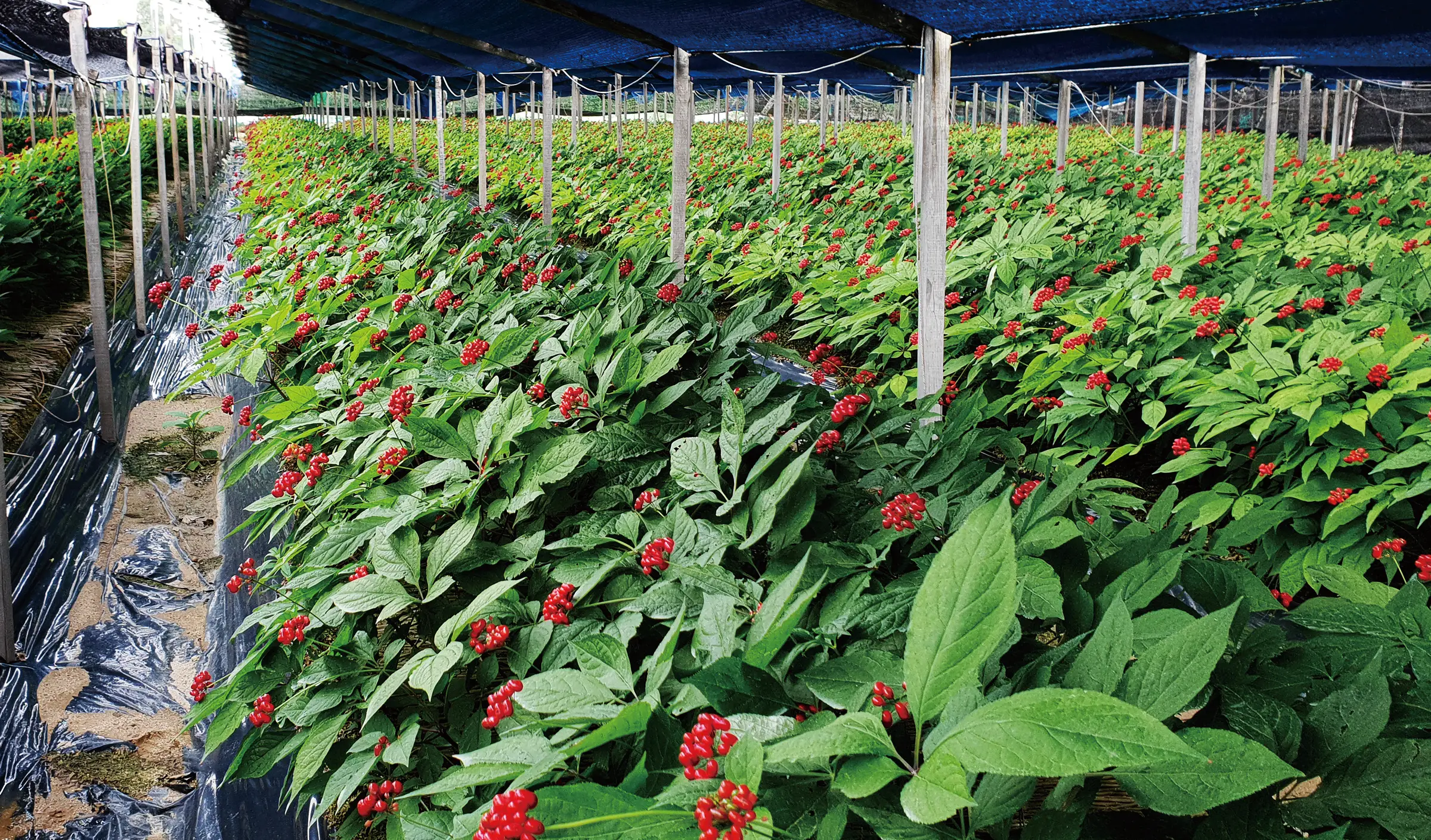
A ginseng root holds its field for up to six years, under shade and through every summer, and then the land cannot grow ginseng again for a decade or more. That is why Korea's ginseng farms keep moving, and why the industry is now trying to make them stay.

The Orchard Moves North
Warm springs that wake trees too early, summers too hot for red fruit, and thousands of planting decisions are redrawing Korea's fruit map, but not in a straight line.