

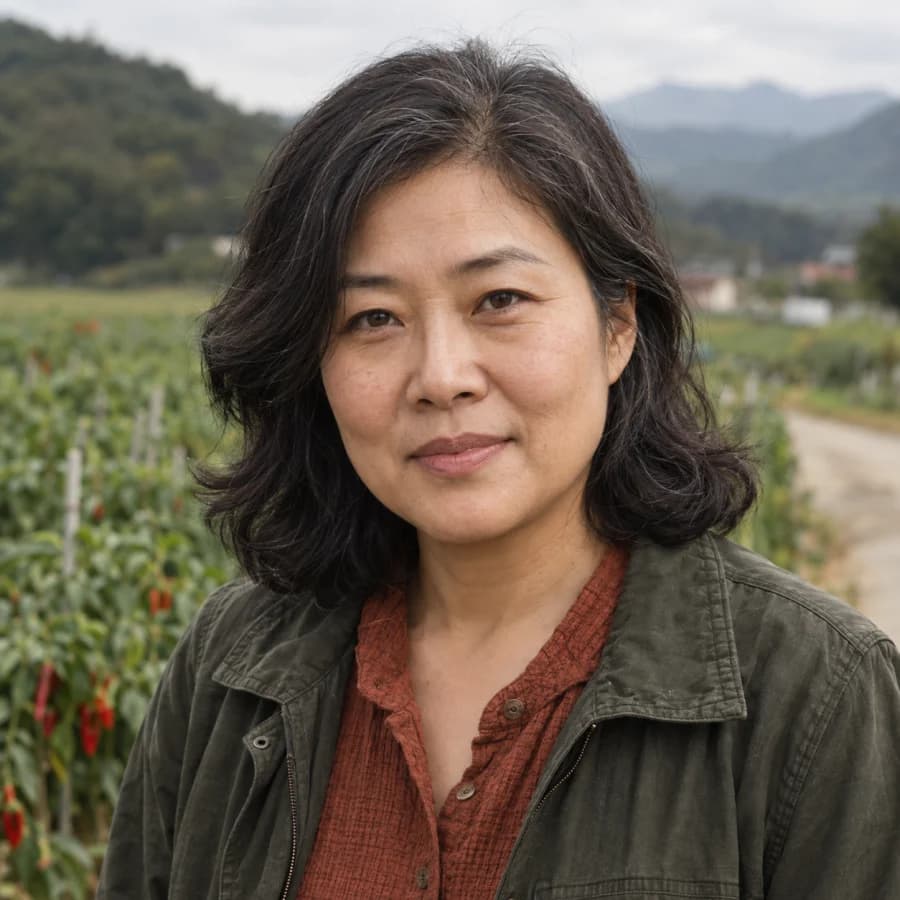
Editor
Mi-kyung Han
Mi-kyung Han covers the crops that fill Korean kitchens: cabbage, garlic, peppers, soybeans, and the seasonings made from them. The features follow a crop from the field calendar through storage to the table, and ask how region, weather, and timing change what cooks buy and what it costs.
Articles by Mi-kyung Han

Fruit & Trade7 min read
Yuja, Not Yuzu: The Jar Korea Fills and the Name It Lost
Every November the south coast picks a small, knobbly citrus that is almost all peel, and most of it goes into jars with sugar. Korea shipped more than 20,000 tonnes of those jars last year, and the United States overtook China as the biggest buyer. Abroad, the jar is often sold as citron tea or yuzu tea.
Read article
Oilseeds & Seasoning8 min read
Two Seeds and a Bottle of Oil
Sesame oil and perilla oil carry Korean flavour in a bottle. Korea imports about nine of every ten sesame seeds it uses and grows most of its perilla, and since 2025 a paddy payment has been trying to grow both.
Read article
Soybeans & Fermentation8 min read
The Bean Behind the Jang
Korea’s heritage definition of jang-making begins with growing soybeans. Factory jang is made overwhelmingly from imported beans, and the payment that moved soybeans into rice paddies has left the government buying more than a third of the domestic crop.
Read article
Vegetables & Fermentation5 min read
The Kimchi Table: A Harvest, a Brine, and a Living Winter
A head of napa cabbage carries a mountain summer, an autumn forecast, a brining decision and a microbial succession into the refrigerator. Kimjang is where those systems meet.
Read article
Fields & Seasons6 min read
Korea's Garlic Belt: Where the Pungency Comes From
Two garlics — a cold-hardy northern type and a mild-wintered southern one — split the peninsula between them, and the season that carries an autumn clove to a June bulb sets the price on the shelf.
Read article