Korea Ag Digest logoKorea Ag Digest logo

Korea Ag Digest

Curated Korean Agriculture News
DigestMagazine

Menu

DigestMagazine

Data

MarketPrice signals for livestock, eggs and farm productsWeatherKMA warnings, soil, observations and crop-risk recordsIntelligenceCrop-risk, import grain and smart-farming signals from our coverage

Desks

CoffeePremiumArabica and Robusta benchmarks, FX signals, café newsBeer & SpiritsPremiumBrewing and distilling inputs, Korean trade, industry news

Free calculators

Coffee landed costBrewery batch costWhisky maturation cost
Buying for a café, brewery or distillery?Request a demo
Korea Ag Digest logoKorea Ag Digest logo

Built to support open discussion and long-term understanding of Korean agriculture. Not affiliated with any publisher.

Explore

MagazineMarketIntelligence

Intelligence

Crop weather mapsWeather & crop riskImport grainSmart farming

Company

AboutTerms of ServicePrivacy PolicyVersion History

Account

Log InSign UpHelp & feedbackCommunity
The Magazine

Korean agriculture, in depth

Origins, markets, and the people — long-form features, mapped and sourced.

Read the Magazine

Resources

EkapepiaCropBioKREIAT Corp
Korea Agriculture Technology Promotion AgencyFarmer Safety 365RDA / Young FarmersPublic Data Portal for Agriculture, Food and Rural AffairsNetwork for Agri-Forest-Food-Tech Information
GitHubShmaplex GitHubCSL GitHubvv2026.08.15

⚠️ Korea Ag Digest is an independent news aggregator and is not affiliated with any of the news outlets referenced. Content is provided without warranty and does not constitute professional advice.

© 2026 Korea Ag Digest. All rights reserved.

Back to Magazine

Fruit & Orchards

Apples of South Korea: Orchards, Regions, Seasons, and the Market

A fruit that arrived by mission ship became the pride of Daegu, the backbone of Gyeongbuk's orchards, and — as the winters warm — a crop on the move north.

By Ji-hyun Choi
Published Jul 11, 2026·5 min read
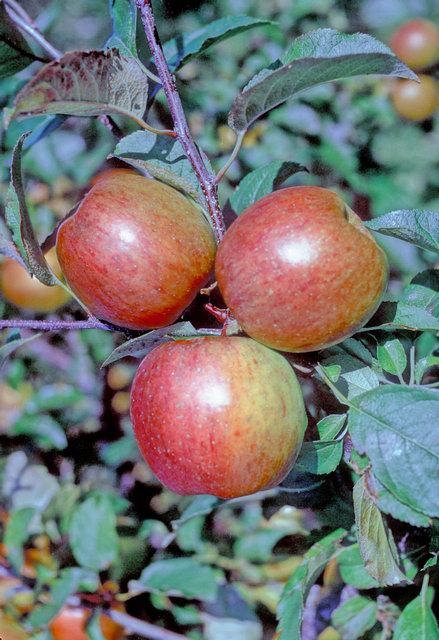
Ripe Fuji apples hanging on the branch in an orchard
Fuji (후지) on the tree — a license-cleared view of the late-season variety photographed at the UK's National Fruit Collection, not a Korean orchard. · Credit: National Fruit Collection (Brogdale), OGL v2

The apple (사과) is the fruit Koreans reach for first — the everyday snack, the Chuseok gift box, the offering on the ancestral table. It is also one of the clearest windows into how Korean agriculture is changing: a crop with a precise arrival date, a heartland everyone can name, and a growing map that is quietly sliding up the peninsula as the climate warms.

This feature traces where Korea's apples come from, the varieties in the crate, the year in the orchard, and the market signal behind the price — with a live link to prices for every commodity on the market data page.

Apples at a glance

Heartland
Gyeongsangbuk-do
Cheongsong, Yeongju, Andong, Mungyeong.
Dominant variety
Fuji (후지 / 부사)
Late-season; more than two-thirds of orchard area.
Bloom
Late Apr – May
White-pink blossom; frost is the risk.
Main harvest
Oct – Nov
Earlies from August; Fuji comes in last.
Emerging frontier
Gangwon-do
Cooler highlands, expanding fast.

A fruit that arrived by ship

Korea did have apples before the modern one. A small, tart native apple called neunggeum (능금) — botanically Malus asiatica — was grown for centuries, and Daegu still calls itself the neunggeum city. But the large, sweet, storable apple in today's crate is the Western apple, and it arrived much more recently.

By the most widely told account, an American medical missionary, Dr. Woodbridge O. Johnson of the mission hospital that became Keimyung University's Dongsan Hospital, planted Western apple saplings at his Daegu mission around 1899. Daegu's warm, relatively dry basin suited the trees, and through the 20th century "Daegu apples" became a national byword. At its mid-century peak the Daegu–Gyeongbuk region supplied the great majority of the country's apples.

The varieties changed underneath that fame. For decades the Korean orchard meant Hongok (홍옥, Jonathan) and Gukgwang (국광, Ralls Janet) — names older Koreans still remember. From the 1970s and 80s the Japanese-bred Fuji swept them aside on the strength of its sweetness and, above all, its keeping quality, and it has ruled the orchard ever since.

Where apples are grown

Relative apple production by province. Warmer-shaded regions carry more of the crop. Gyeongsangbuk-do is the heartland; Chungbuk and the southern highlands follow; Gangwon is the fast-growing northern frontier. Daegu, the historic apple capital, now grows little inside the city itself.

Map of Relative production across South Korean provincesGyeonggiGangwonChungbukChungnamGyeongbukJeonbukDaeguGyeongnamJeonnam

Select a region to focus it.

Legend (index)
  • 6–25
  • 25–44
  • 44–62
  • 62–81
  • 81–100
Relative production by province
RegionRelative production (index)
Gyeonggi10 index
Gangwon26 index
Chungbuk55 index
Chungnam18 index
Gyeongbuk100 index
Jeonbuk30 index
Daegu6 index
Gyeongnam38 index
Jeonnam8 index

Relative index (0–100) summarizing the documented production ranking, not KOSIS tonnage or an estimate of absolute output. It should only be used to compare the broad regional pattern shown here. No private farm coordinates are used; only province/municipality aggregation.

Source: Illustrative relative index — see methodologyAs of 2026

What's in the crate: the varieties

Korea's orchard is, by area, overwhelmingly one apple — but the calendar is filled out by a small cast of others, several of them bred at home by the Rural Development Administration (RDA).

  • Fuji (후지 / 부사) — the late-season storage king, well over two-thirds of Korea's orchard area. Firm, sweet, and it holds for months in cold and controlled-atmosphere storage, which is why it can be on the shelf year-round. Red 'sports' and bicolor strains are common.
  • Hongro (홍로) — an RDA-bred early-to-mid variety (released 1988) that ripens around late August–September. Its timing makes it the classic Chuseok gift apple; a big share in Chungju.
  • Tsugaru / Aori (쓰가루 · 아오리) — the summer apple, picked green-to-red from August. Crisp and juicy but a poor keeper — an eat-now fruit.
  • Gamhong (감홍) — an RDA-bred premium (Spur EarliBlaze × Spur Golden Delicious): intensely sweet-tart, sometimes marketed as the luxury apple. Late season, harder to grow.
  • Sinano Gold, Arisu, Summer King — newer yellow and early-red cultivars spreading as growers diversify and chase earlier ripening and heat tolerance.
  • Hongok (홍옥) & Gukgwang (국광) — the mid-century heirlooms, now niche. Sought out by older buyers and cider/baking cooks for their sharpness.

One apple year

From spring blossom to a fruit that can sit in storage until the next crop.

  1. Late Apr – May
    Blossom

    White-pink flowers open; a late frost here can wipe out a season, the reason growers watch the forecast closely.

  2. Jun – Jul
    Fruit set & thinning

    Hand-thinning (적과) removes excess fruit so the rest size up; some orchards bag fruit for color and finish.

  3. August
    Early varieties

    Tsugaru/Aori and other summer apples reach market first.

  4. Late Aug – Sep
    Hongro for Chuseok

    Hongro ripens into the Chuseok gift season, the year's biggest demand spike.

  5. Oct – Nov
    Fuji main harvest

    The late Fuji crop comes in and sets the tone for the year's supply.

  6. Dec – following spring
    Storage supply

    Cold and controlled-atmosphere (CA) storage carries Fuji through winter and spring, when prices typically firm.

Source: RDA growing calendar (general)As of 2026

The apple price signal

Live

National-average retail price for Fuji (후지) apples, sold by KAMIS per 10 fruit (원/10개). When live KAMIS data is available it shows here automatically; otherwise this is an editorially pinned, clearly-labeled snapshot. Prices typically ease at the autumn harvest and firm through storage season and the Chuseok gift spike.

Latest
30,962
Apple KRW/10pcs
Weekly change
+2,116(+7.3%)
Range
17,103–36,549
As of Aug 28, 2026
View full market data

From orchard to market

Two things shape the apple economy more than any headline. The first is Chuseok: the autumn harvest festival turns premium apples into gift boxes and ancestral-rite offerings, and demand — and price — jump for the best fruit. The second is storage. Fuji's keeping quality, extended by controlled-atmosphere (CA) rooms, is what lets Korea eat domestic apples in June from an October harvest; it also means the tightest prices often come in late spring, when stores run low.

Korea's fresh-apple supply is overwhelmingly domestic. Strict quarantine rules keep most foreign fresh apples out on pest-risk grounds, so the shelf is a Korean shelf — which is exactly why the market signal on the market data page tracks a genuinely national crop.

Beyond the commercial orchards there is a lively enthusiast scene. Home and weekend-plot (주말농장) growers plant apples on dwarfing rootstocks (M9, M26) to keep trees small, and the ornamental mini-apple 'Alps Otome' (알프스오토메) is a favorite as a pollinizer and balcony tree. Regional pride runs deep, too: Cheongsong (청송) and Yeongju (영주) apples are protected regional brands prized for firmness and sugar from wide day-night temperature swings, with Mungyeong, Chungju, Geochang and highland Jangsu each carrying a local reputation.

“We used to say you could taste Daegu in an apple. Now the young trees that ripen best are two provinces north.”
— A sentiment common among Gyeongbuk apple growers

The belt moves north

Apples need cold. Warm winters shorten the chill the trees require, spring frost hits early blossom, and summer heat brings sunburn and cracking. As Korea warms, the map is responding. Press reporting of Rural Development Administration (RDA) analysis describes Gangwon-do's apple area rising several-fold over the past decade, while apple land in the Daegu–Gyeongbuk heartland has fallen by roughly half over about thirty years.

By RDA climate projections cited in Korean media, the zone well-suited to apples keeps shrinking and shifting to higher latitudes and elevations — toward parts of Gangwon by the 2070s under high-emission scenarios. Treat these as scenario projections, not certainties.

That is why a fruit so tied to Daegu now grows in Yeongwol and Jeongseon, and why "where apples are grown" is a moving answer. The heartland is still Gyeongbuk — but the frontier is heading uphill and north.

Blossom to fruit

Apple tree in full white-pink blossom in spring
Spring blossom — the frost-sensitive start of the apple year. · Credit: Gerda Arendt (CC0) · Rights: CC0 — see docs/magazine-image-rights.md
Rows of apple trees in an orchard on a hillside
An orchard in leaf in Germany, used to illustrate orchard structure rather than a Korean location. · Credit: Gerda Arendt (CC0) · Rights: CC0 — see docs/magazine-image-rights.md
A ripe red-blushed Fuji apple
Fuji — the variety in most Korean crates. · Credit: Scott Bauer, USDA ARS (public domain) · Rights: Public domain — see docs/magazine-image-rights.md

Related coverage

Live

Recent ingested articles mentioning apples, pulled live from the news corpus.

  • Rural Development Administration Begins Distribution of Apple Rootstock ‘Geneva11’Korea Agriculture Newspaper (한국농업신문) · Sep 17, 2026
  • To keep fruits, vegetables, and grains fresh for a long time… Store apples ‘separately’, and sweet potatoes ‘keep cool’Nongmin Newspaper (농민신문) · Sep 16, 2026
  • Prevent Fire Blight with Timely Chemical Control TechniquesAgriculture, Fisheries & Livestock News (농수축산신문) · Sep 14, 2026
  • CPTPP Roundtable Breaks Down… Farmers’ Groups Call It “Deceiving Farmers”Agriculture, Fisheries & Livestock News (농수축산신문) · Sep 11, 2026
  • Processed foods developed with Rural Development Administration technology are perfect as Chuseok giftsAgriculture, Fisheries & Livestock News (농수축산신문) · Sep 11, 2026
More news
Sources & methodology

Market figures come only from KAMIS (aT) national-average retail data for Fuji apples (원/10개); the pinned snapshot is an illustrative fallback, clearly labeled, not a sourced price. The regional map intentionally uses a relative index to show the documented production pattern and must not be read as exact KOSIS tonnage. History (Daegu's ~1899 missionary introduction; the Hongok/Gukgwang-to-Fuji shift), varieties, and the northward climate shift are drawn from public reporting and the RDA growing calendar; climate figures are press-cited RDA projections and are framed as scenarios. Images are license-verified illustrations (not Korea-specific); each source, author, license, and clearance status is recorded in docs/magazine-image-rights.md. No specific individuals or private farms are named beyond the widely-attributed Daegu account and public regional brands.

Sources:
  • KAMIS (aT) price data
  • KOSIS / Statistics Korea
  • Rural Development Administration (RDA)
  • MAFRA (Ministry of Agriculture, Food and Rural Affairs)
  • Korea JoongAng Daily — apple farmers head north (climate)

More from the Magazine

A Korean pear orchard in summer, with young fruit wrapped in white paper bags under a green canopy
Climate & Orchards

The Orchard Moves North

Warm springs that wake trees too early, summers too hot for red fruit, and thousands of planting decisions are redrawing Korea's fruit map, but not in a straight line.

Sep 17, 2026·8 min read
Tall walls of green hop bines climbing strings between wooden poles in a hop yard under a grey sky
Hops & Brewing

Can Korea Grow Its Own Hops?

Korea grew hops once, then imported nearly all of them. Now a handful of farms are planting again while imports fall by half. What would make a Korean hop something brewers buy twice?

Sep 17, 2026·8 min read
A dense layer of dried Korean red chili peppers
Peppers & Seasonality

The Pepper Year: From Green Fruit to Korea's Red Pantry

One plant moves through two markets and a dangerous summer: fresh green pepper, ripe red fruit, dried pods, powder, and the long work of protecting color and flavor.

Jul 13, 2026·6 min read